
Excerpt from Issue 05
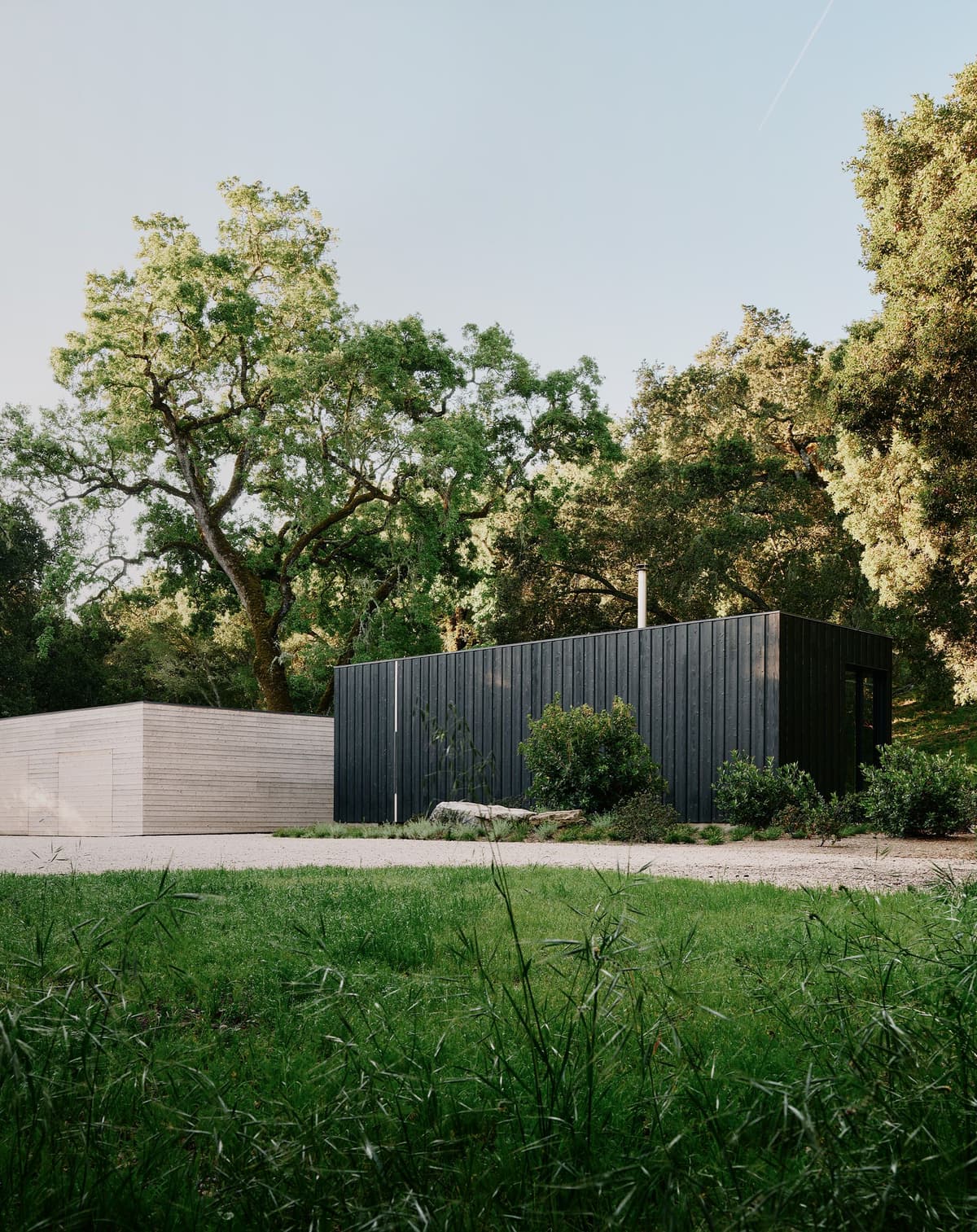
QUIET ON THE LAND
An architect reflects on designing an intergenerational Carmel Valley compound for her family.
Text by Gabriele Mary Ann Schicketanz Photos by Joe Fletcher Additional Photo by Mariko Reed
Since I moved to the Central Coast in the late ‘80s, nature has been my main guide and inspiration. I’ve found that the landscape dictates the project, not the other way around. The ancient oaks or rock outcroppings determine the scale, the sun’s path determines orientation, and even the local soils influence our construction method.
For this specific project, a multi-generational compound for my family, we were deeply respectful of the Carmel Valley ranching traditions. We chose a simple palette, utilizing oak for floors and interior accents because it is the dominant tree here, and selected all-black hardware and fixtures as a subtle, powerful nod to the area’s historic blacksmith traditions.
When living together on one property, it is crucial to respect each other’s private spaces while enjoying the common areas. In our case, we wanted to make sure that both the small family home (2,500 square feet) and the ADU (1,200 square feet) could enjoy the view of the open meadow and the creek. We achieved this by orienting the homes at slight angles away from each other.
Both residences look towards the meadow, which blooms with wonderful wildflowers from March to July, but neither looks directly into the other’s home. This careful spatial arrangement ensures independence within close proximity; a cornerstone of successful intergenerational living.
The guiding idea was to blend these homes into the natural environment, situating them between the ancient oaks—whose powerful, rooted presence immediately established the scale and imperative for preservation. I wanted the structures to be quiet on the land. This meant maintaining a low profile through single-story homes, to ensure we did not intrude into the trees’ canopy space. We wanted the buildings to feel minimal, non-intrusive, and deeply connected to the land, allowing the landscape to remain the focus.
There is very little grading, taking advantage of the natural slope, and staggering the various “wings” of both homes to respect the critical root zones of the oaks. We chose a minimal footprint to preserve the open meadow and selected exterior finishes that truly blend with nature, arranging the building blocks as a composition of dark and light wooden blocks in the native landscape...
continued on page 30 of Issue 05
SUBSCRIBE NOW
Selected Excerpts from Issue 05

PERPETUAL MOTION
READ MORE

A DIZZY TRIP
READ MORE
OPEN HOUSE
READ MORE
AMERICAN DREAM
READ MORE